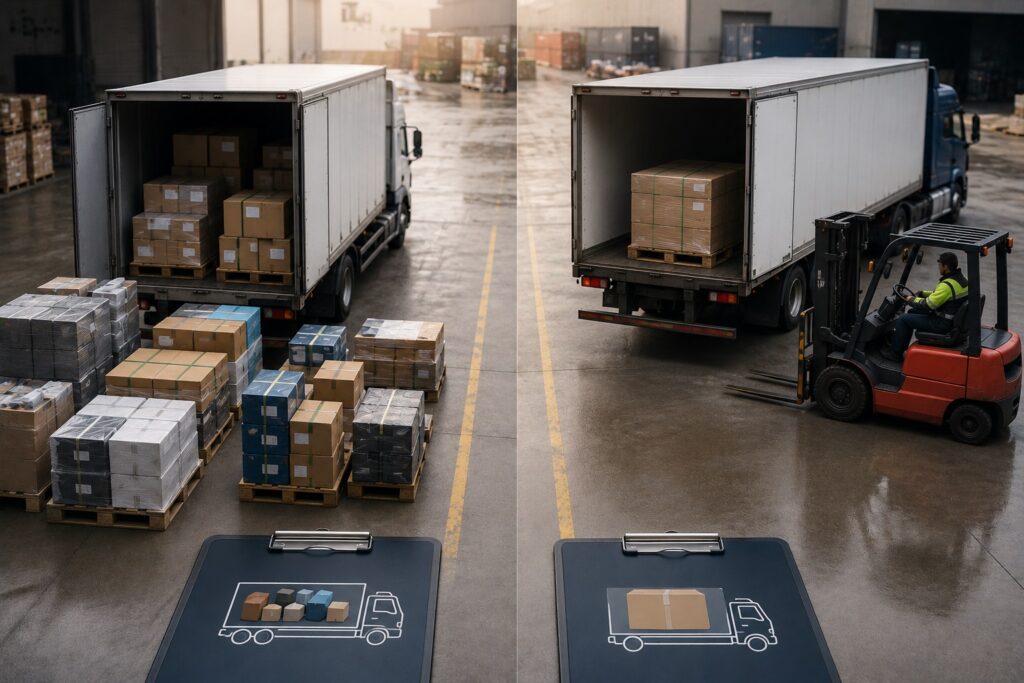

Freight costs continue to influence supply chain planning across North America. Many businesses now compare shipping models more carefully before moving freight. The decision often comes down to choosing between less than truckload shipping and partial truckload shipping.
Both options support businesses that do not require a full trailer. However, each shipping model serves different freight volumes, timelines, and handling requirements. Choosing the right option can improve transit efficiency and reduce transportation costs.
Many companies rely on experienced LTL shipping companies to help evaluate shipment size, delivery urgency, and route efficiency before selecting a freight solution.
What Is Less Than Truckload Shipping?
Less than truckload shipping combines freight from multiple shippers into one trailer. This method helps businesses reduce shipping costs when freight does not fill an entire truck.
LTL Shipping Services typically work best for:
- Smaller palletized freight
- Frequent commercial shipments
- Regional or cross-border deliveries
- Businesses with flexible transit schedules
Carriers organize freight based on destinations and delivery routes. Since several shipments share trailer space, businesses only pay for the portion used.
This transportation model helps improve trailer utilization while controlling shipping expenses.
When Does PTL Become a Better Freight Option?
Partial truckload shipping handles larger freight volumes than standard LTL shipments. PTL usually applies when freight occupies several pallets but does not require a full trailer.
Unlike less than truckload shipping, PTL freight generally stays on one truck throughout transit. This reduces freight handling and lowers the risk of damage.
PTL often works better for:
- Large pallet shipments
- Sensitive freight
- Time-sensitive deliveries
- Freight requiring minimal transfers
Businesses shipping heavier loads may benefit from fewer freight touches and more direct transportation routes.
How Do LTL and PTL Differ in Freight Handling?
Freight handling creates one of the biggest differences between these shipping methods.
LTL Shipping Companies often move freight through multiple terminals before final delivery. This process supports route efficiency but can increase handling frequency.
PTL shipments usually remain on the same trailer. Fewer transfers can improve delivery consistency and reduce delays.
Here is a simple comparison:
| Shipping Factor | LTL Shipping | PTL Shipping |
| Freight Size | Smaller shipments | Larger shipments |
| Trailer Sharing | Multiple shippers | Fewer shippers |
| Freight Handling | Higher | Lower |
| Transit Flexibility | Moderate | Higher |
| Cost Structure | Lower for small freight | Better for larger loads |
Choosing the right model depends on freight size, budget goals, and delivery expectations.
Why Do Businesses Use LTL Shipping Services for Cost Control?
Transportation costs remain a major concern for manufacturers, distributors, and retail suppliers. LTL shipping services help companies avoid paying for unused trailer space.
This approach benefits businesses with recurring shipments that move smaller freight volumes throughout the week.
Additional advantages include:
- Lower transportation expenses
- Better shipment flexibility
- Scalable freight planning
- Improved route consolidation
Many North American businesses use less than truckload shipping to maintain steady inventory movement without increasing logistics costs.
How Can the Right Freight Partner Improve Shipping Efficiency?
Freight efficiency depends on more than pricing alone. Carrier experience, route coverage, equipment reliability, and shipment coordination all influence transportation performance.
MGA International supports businesses with customized freight solutions across North America. The company provides cross-border transportation, LTL, FTL, flatbed shipping, and intermodal freight support.
Its experienced logistics network helps businesses choose shipping models based on freight size, transit needs, and operational goals. Reliable freight coordination also helps reduce delays and improve shipment visibility across complex supply chains.
What Makes Freight Planning More Cost Effective?
The right freight strategy supports both operational efficiency and long-term transportation savings. Businesses comparing PTL and LTL freight should evaluate shipment frequency, pallet count, handling sensitivity, and delivery timelines before selecting a shipping model.
Working with experienced LTL Shipping Companies can simplify freight planning and improve transportation performance across North America.
MGA International delivers dependable freight solutions designed for modern supply chain operations. Contact MGA International to explore flexible transportation strategies tailored to commercial shipping needs.