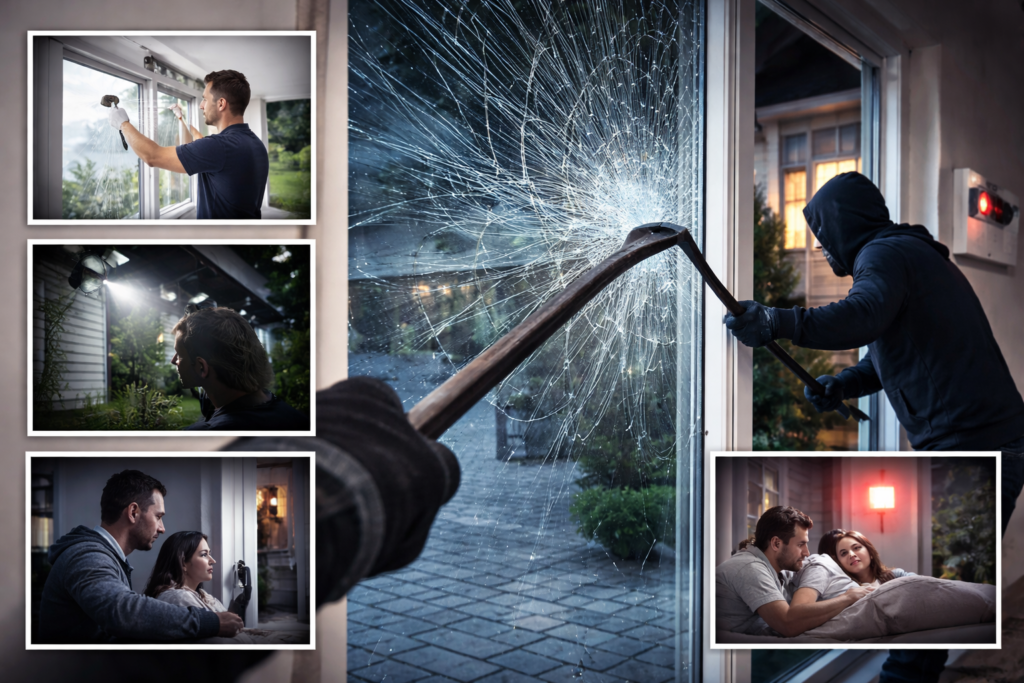

Glass break-ins can happen in seconds, and once access is gained, the risk of repeat incidents increases. Many homeowners assume replacing broken glass is enough, but the underlying vulnerability often remains unchanged.
This is where shatterproof window film plays a critical role. By changing how glass responds to impact, it slows forced-entry attempts and reduces the likelihood of successful access.
Why Glass Is the Most Vulnerable Entry Point in Homes
Glass is designed for visibility and light, not resistance. Standard residential glass panels can break quickly under force, especially in areas with low visibility.
Common vulnerable points include:
- Sliding patio doors
- Basement windows
- Rear-facing windows
- Glass panels near door locks
Once the glass breaks, entry becomes immediate. There is little delay and minimal resistance. This is where shatterproof window film plays a role by changing the outcome after impact.
1. Holds Glass Together After Impact
Shatterproof window film is applied directly to the interior surface of the glass. When struck, the film bonds broken pieces together instead of allowing them to scatter.
This creates:
- A barrier that remains in place after impact
- Reduced risk of immediate entry
- Controlled damage rather than complete failure
Instead of a clear opening, the glass remains intact enough to resist access.
2. Slows Down Forced Entry Attempts
Most residential break-ins are completed within minutes. Delaying access, even briefly, increases the chances of detection or interruption. Security measures that slow entry often reduce the likelihood of a successful attempt.
Shatterproof window film disrupts quick entry by:
- Requiring repeated strikes to create an opening
- Increasing the time needed to break through
- Adding resistance that delays entry
Even a short delay can influence whether an attempt continues or is abandoned.
3. Makes Entry Noisier and More Noticeable
Glass breaking is already loud. However, glass reinforced with film behaves differently.
Instead of a single clean break, forced entry becomes:
- Louder due to repeated impacts
- More prolonged
- More likely to attract attention
This increased visibility can act as a deterrent, especially in residential areas where activity is more likely to be noticed.
4. Reinforces Weak Points Without Replacing Glass
Replacing all glass in a home is not always practical. Many properties have multiple vulnerable glass points that would require significant upgrades.
Shatterproof safety and security window film is reinforced by:
- Strengthening existing glass
- Covering multiple entry points efficiently
- Maintaining the original appearance of windows and doors
This allows homeowners to address multiple vulnerabilities efficiently and without major structural changes.
5. Supports a Layered Home Security Strategy
No single solution prevents every type of break-in. Effective protection often comes from layering multiple strategies.
Shatterproof window film supports this approach by:
- Acting as a first line of resistance at entry points
- Working alongside door reinforcement systems
- Complementing surveillance and lighting improvements
Security strategies based on Crime Prevention Through Environmental Design (CPTED) focus on reducing opportunity. Reinforcing glass aligns with this approach by making entry more difficult.
When Should Homeowners Consider Shatterproof Window Film?
Certain situations increase the need for reinforced glass:
- After a recent break-in in the neighbourhood
- Moving into a new home with unknown security risks
- Homes with large glass doors or multiple window access points
- Properties with limited visibility from the street
For many homeowners, the decision is driven by awareness of how quickly glass entry can occur. Recent break-ins often call for upgrading protection in residential properties.
Strengthening Home Security Starts with the Right Entry Points
Improving home security does not always require complex systems. In many cases, addressing the most vulnerable entry points creates the greatest impact.
Shatterproof window security film in Toronto focuses on one of the most common access methods, glass entry. By holding the glass together, slowing intrusion, and increasing visibility, it changes how forced-entry attempts unfold.
Homeowners looking to reduce the risk of forced entry can contact Blue Line Home Protection for a professional assessment to identify vulnerable glass entry points and determine the most effective next steps.