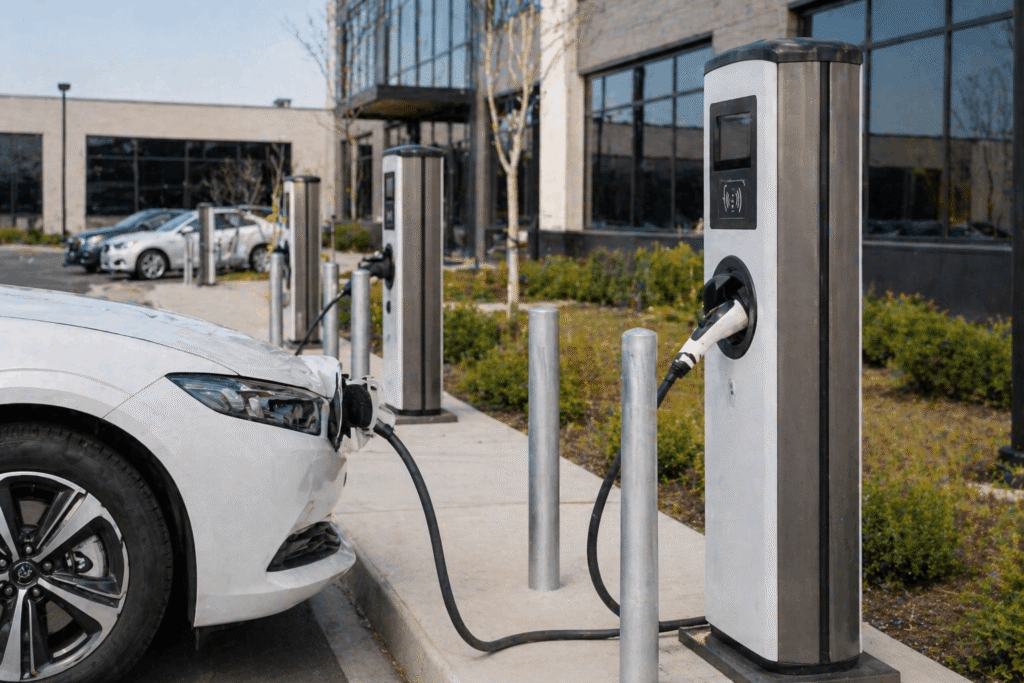

Electric vehicle adoption is expanding beyond residential use into commercial environments. Offices, retail properties, and multi-unit buildings are increasingly adding charging infrastructure to support tenants, employees, and customers.
However, a successful commercial EV charging station installation requires more than selecting equipment. It involves planning electrical capacity, ensuring compliance, and preparing for long-term usage. Careful planning at the early stage helps businesses avoid costly upgrades and ensures the system can scale as demand grows.
1. Site Capacity and Electrical Demand
The first step in any commercial EV charging installation is evaluating the building’s electrical capacity. EV chargers place a continuous load on the system, and multiple units can significantly increase demand.
Electricians assess:
- Existing service size and panel capacity
- Available breaker space
- Current electrical load from building operations
- Potential need for service upgrades or additional panels
Without proper load planning, systems may experience overload conditions or require costly modifications later. Businesses planning to install commercial EV chargers must ensure infrastructure can support both current and future demand.
2. Charger Types and Scalability
Commercial EV charging systems vary depending on usage needs. Common charger types include:
- Level 2 chargers for standard workplace or retail use
- Level 3 or DC fast chargers for high-traffic or quick-turnover locations
Scalability is an important consideration. Businesses often start with a small number of units but expand as EV adoption increases.
A well-planned commercial EV charging station installation includes:
- Space for additional chargers
- Load management systems
- Infrastructure that supports future expansion
Planning for scalability reduces disruption when additional units are added later.
3. Compliance and Permit Requirements
Commercial electrical installations must comply with Ontario Electrical Safety Code requirements and local regulations. Permits are required before installation begins, and inspections are necessary before systems can be activated.
Licensed contractors handle:
- ESA permit filing
- Code-compliant wiring and installation
- Inspection scheduling and approval
Compliance is essential not only for safety but also for liability and insurance considerations. Businesses working with experienced providers ensure that commercial EV charging installation meets all regulatory requirements.
4. Installation Logistics
Installing EV charging stations in commercial settings often involves coordination with building operations and site layout. Key logistical considerations include:
- Distance between electrical panels and charger locations
- Trenching or conduit routing requirements
- Parking space allocation
- Accessibility for users
Minimizing disruption during installation is important for businesses that remain operational. Contractors may schedule work in phases or during off-hours to maintain continuity.
Planning logistics in advance helps streamline the process when businesses install commercial EV chargers.
5. Maintenance and Future Expansion
Commercial EV charging systems are long-term infrastructure investments. Maintenance and future scalability must be considered from the beginning.
Important factors include:
- Routine inspection of electrical components
- Monitoring system performance
- Upgrading equipment as technology evolves
- Expanding charging capacity as demand increases
A properly designed commercial EV charging station installation supports ongoing maintenance and allows for seamless upgrades.
Why Canadian Wire Wizards Handles Commercial Installs
Canadian Wire Wizards provides licensed EV charging installation services across Ontario, supporting commercial properties with structured planning and compliance.
Our services include:
- Electrical system assessment and load analysis
- Design of scalable charging infrastructure
- Installation of Level 2 and commercial charging systems
- ESA permit filing and inspection coordination
- Planning for future expansion
Our experience helps businesses implement commercial EV charging installations that align with operational needs and regulatory standards.
Plan for Long-Term Usage and ROI
Installing EV charging infrastructure is a long-term investment that supports evolving transportation trends and property value. Proper planning ensures systems operate efficiently, meet compliance requirements, and scale with future demand.
Businesses that take a structured approach to installing commercial EV chargers benefit from reliable performance and a reduced need for rework. Working with licensed professionals ensures installations are safe, compliant, and built for long-term use. For more details, contact us now!