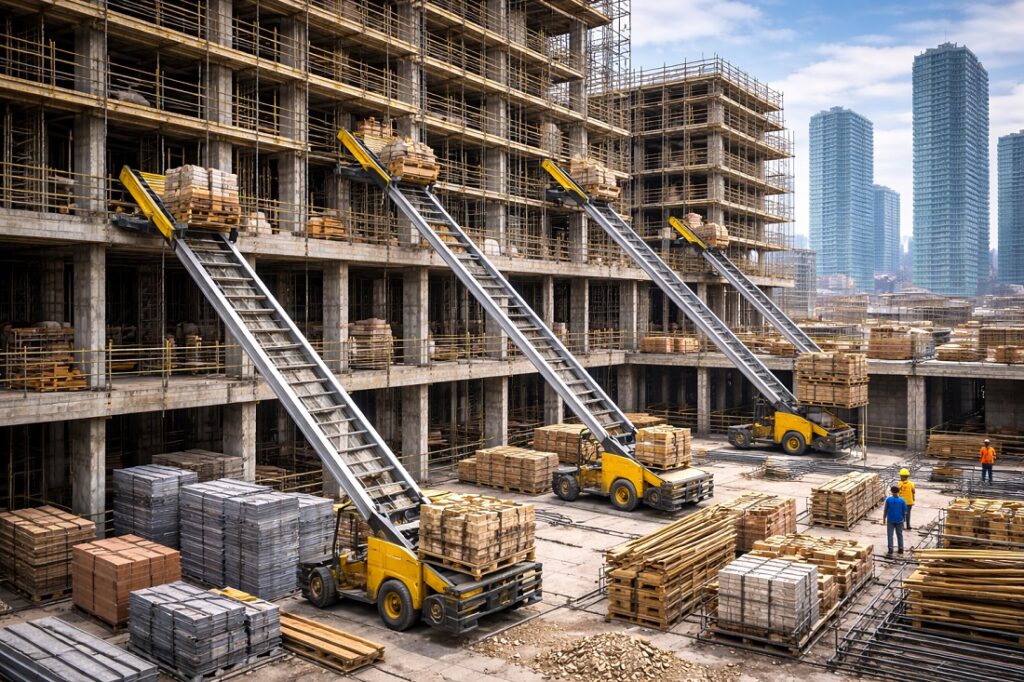

High-rise construction magnifies every inefficiency. As buildings grow taller, the distance between ground-level staging areas and active work zones expands, placing constant pressure on vertical access systems. When crews and materials cannot move efficiently, productivity declines, schedules compress, and safety risks increase. These challenges make vertical movement one of the most critical logistics considerations on tall structures.
For this reason, construction hoists have become essential to modern high-rise projects. Designed to handle continuous vertical transport under demanding conditions, these systems support reliable movement of both personnel and materials as structures rise floor by floor.
Understanding Vertical Movement Challenges in High-Rise Projects
Vertical movement challenges increase with height, workforce density, and trade overlap. Long travel times, congestion during shift changes, and material bottlenecks quickly erode productive hours. Without adequate lifting capacity, even well-planned schedules struggle to keep pace with site activity.
A properly specified construction elevator helps address these challenges by centralizing vertical access and reducing reliance on cranes, temporary stairs, or manual transport.
What Are Hoist Elevators?
A hoist elevator is a vertical transport system installed specifically for construction environments. Unlike permanent building elevators, these systems are engineered for external installation, frequent cycling, and high load demands. They operate along mast or guide systems and are designed to scale with the building height.
In high-rise projects, hoist elevators serve as the primary means of moving workers and materials between floors throughout multiple construction phases.
Why High-Rise Projects Depend on Hoist Elevators
High-rise projects demand predictable access. As the number of floors increases, inefficiencies multiply. Construction hoists provide controlled, repeatable vertical movement, keeping crews productive and materials flowing without interruption.
These systems reduce reliance on cranes for routine transport, freeing crane time for structural lifts and minimizing conflicts between competing trades for access.
How Hoist Elevators Improve Personnel Movement
Personnel movement affects daily productivity more than any single material flow. Long waits for access reduce effective work hours and contribute to fatigue. A hoist elevator allows workers to reach job areas quickly and consistently, especially at shift start, during breaks, and during changeovers.
By supporting safe, enclosed transport, construction hoists also reduce reliance on temporary stairs or ladders, improving worker comfort and safety on tall structures.
How Hoist Elevators Improve Material Movement
Material flow must align with construction sequencing. Delayed deliveries create idle time and cluttered staging areas. A construction elevator provides a dedicated path for moving tools, equipment, and materials directly to active floors.
This direct access reduces double-handling and minimizes congestion around loading zones. A hoist elevator also supports better coordination between deliveries and installation activities.
Throughput Advantages on High-Rise Sites
Throughput is the rate of movement within a given timeframe. Construction hoists are designed to move larger loads at consistent speeds, supporting higher throughput during peak demand periods.
Larger car sizes, defined loading procedures, and controlled stop sequencing allow hoist elevators to maintain a steady flow even when multiple trades require simultaneous access.
Impact on Labor Productivity and Crew Efficiency
Labor productivity depends on minimizing non-productive time. Waiting for access, carrying materials manually, or navigating congested routes all reduce output. A construction elevator reduces travel time, allowing crews to begin work sooner and remain focused on installation tasks.
Over the course of a high-rise project, these incremental gains translate into significant schedule protection and improved labor utilization.
Safety Benefits of Using Hoist Elevators
Safety risks increase with height and congestion. Improvised access methods, overcrowded platforms, and rushed loading contribute to incidents. Construction hoists feature engineered safety features, including enclosed cabins, controlled acceleration, and defined load limits.
A hoist elevator reduces fall exposure, limits manual handling injuries, and supports compliance with site safety protocols across all phases of construction.
Load Capacity and Car Design Considerations
Load capacity determines how effectively a system supports daily operations. Construction hoists must accommodate personnel, tools, and materials without exceeding rated limits. Car design also affects efficiency, with wider cabins and reinforced floors supporting mixed-use transport.
Proper car configuration allows a construction elevator to handle varying load profiles as project needs evolve.
Height, Speed, and Performance Factors
Performance requirements change as buildings rise. Travel height affects cycle time, while speed and stopping accuracy influence throughput. A hoist elevator designed for tall structures maintains stable performance across the full height, reducing delays as additional floors are added.
Balancing speed with safety ensures consistent operation without excessive mechanical strain.
Integration With Construction Phases
High-rise construction progresses through distinct phases, from structure to enclosure to interior fit-out. Construction hoists must adapt to each phase by supporting changing traffic patterns and load requirements.
Integrating a construction elevator into the project schedule allows vertical access capacity to scale alongside workforce size and material demand.
Hoist Elevators vs Alternative Access Methods
Alternative access methods such as cranes, material lifts, or temporary stairs have limitations. Cranes are best reserved for heavy structural lifts, while stairs increase fatigue and limit material movement. A hoist elevator provides a dedicated, reliable solution that supports continuous vertical access.
Compared to alternatives, construction hoists offer greater consistency, safety, and throughput on tall projects.
Common Mistakes That Limit Hoist Elevator Effectiveness
Common mistakes include underestimating peak demand, delaying installation, and failing to adjust capacity as the project grows. Misaligned planning reduces the effectiveness of a construction elevator and creates avoidable congestion.
Early assessment and periodic review help ensure the hoist system remains aligned with site needs.
When Hoist Elevators Become Critical Instead of Optional
As projects exceed mid-rise heights and workforce density increases, vertical access constraints intensify. At this point, construction hoists shift from being a convenience to a necessity.
High-rise projects with overlapping trades, extended schedules, and heavy material flow rely on hoist elevators to maintain momentum and avoid cascading delays.
Planning Hoist Elevator Deployment for Maximum Efficiency
Effective planning evaluates building height, workforce size, material flow, and peak usage periods. Deploying the right construction elevator early allows teams to avoid reactive decisions later.
Proactive planning also supports smoother upgrades or configuration changes as project demands evolve.
Cost vs Productivity: Why Efficient Movement Saves More Than It Costs
While hoist elevators represent a significant investment, the cost of inefficiency is often greater. Lost labor hours, delayed milestones, and safety incidents quickly outweigh equipment expense.
A well-planned hoist elevator protects productivity, supports predictable scheduling, and reduces indirect costs across the project lifecycle.
Hoist Elevators Keep High-Rise Projects Moving
High-rise construction depends on efficient vertical movement. Without reliable access, even well-coordinated projects struggle to maintain pace. Thoughtful deployment of construction hoists supports safer operations, higher productivity, and stronger schedule control from start to finish.
UCEL Inc. provides engineered hoist and vertical access solutions designed for demanding high-rise construction environments across Canada and the USA. For projects requiring a reliable man hoist solution that supports both personnel and material movement, connect with UCEL Inc. to plan vertical access that keeps high-rise projects moving without interruption.