
Accurate weather data shapes daily decision-making across industries that rely on environmental awareness. From infrastructure planning to facility safety, dependable weather measuring instruments reduce uncertainty and support long-term operational stability. When measurements are imprecise or incomplete, weather-related risks and costs increase.
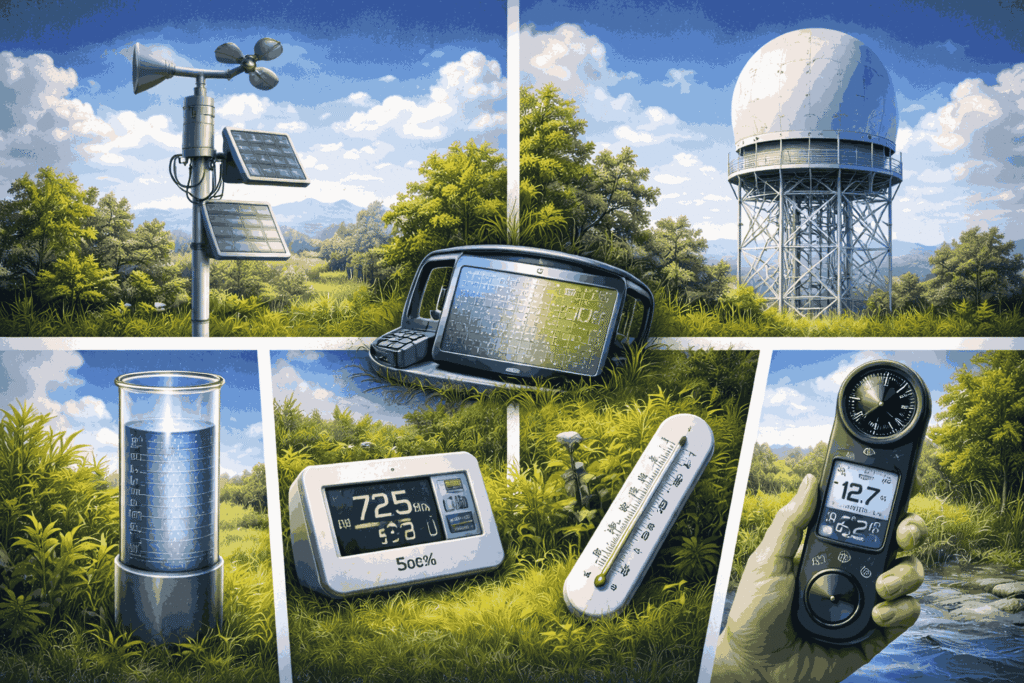
Modern systems rely on multiple instruments working together to track wind, temperature, humidity, precipitation, and atmospheric pressure. Below is a practical listicle breaking down the most important weather-measuring instruments in use today, and why each matters.
Why Weather Measuring Instruments Matter for Businesses
Clear and consistent weather data supports planning, safety, and performance across commercial and industrial environments. Reliable instruments help organizations:
- Monitor environmental conditions that affect equipment and structures
- Improve operational efficiency through data-backed decisions
- Support compliance and safety protocols
- Reduce downtime caused by unexpected weather changes
Accurate measurement ensures decisions are based on real conditions—not assumptions.
1. Anemometers – Measuring Wind Speed with Accuracy
Anemometers measure wind speed and are widely used in construction planning, environmental monitoring, renewable energy sites, and facility management.
Common anemometer types include:
- Cup anemometers that rotate with the wind force
- Propeller anemometers that are designed for directional airflow
- Ultrasonic anemometers that use sound waves with no moving parts
In environments where durability and low maintenance are priorities, ultrasonic designs are often preferred. Consistent wind speed data support structural load analysis, site suitability assessments, and operational safety planning.
2. Wind Direction Sensors – Tracking Airflow Patterns
Wind direction sensors work alongside anemometers to determine the direction from which the wind originates. This data is critical for understanding airflow behavior around buildings and outdoor systems.
Wind direction measurement helps organizations:
- Improve placement and orientation of structures or equipment
- Support air quality and ventilation planning
- Analyze long-term environmental patterns
When paired with wind speed data, these sensors provide a complete picture of wind behaviour.
3. Temperature Sensors – Monitoring Thermal Conditions
Temperature sensors measure ambient air temperature and form the foundation of most weather monitoring systems. Even small temperature changes can affect equipment performance and material behavior.
Businesses use temperature sensors to:
- Track outdoor temperature trends
- Support heating and cooling system operation
- Protect temperature-sensitive equipment
Accurate temperature data improves response planning and supports consistent operations throughout seasonal changes.
4. Humidity Sensors – Measuring Moisture in the Air
Humidity sensors track moisture levels in the air. Excess humidity can damage equipment, compromise materials, and create environmental compliance issues.
Reliable humidity measurement supports:
- Equipment protection
- Mold and corrosion prevention
- Monitoring of environmental conditions
When combined with temperature data, humidity sensors help calculate dew point and assess condensation risk.
5. Barometric Pressure Sensors – Understanding Atmospheric Changes
Barometric pressure sensors measure air pressure to help identify changing weather conditions. Pressure shifts often signal the approach of weather events or longer-term climate trends.
Organizations use pressure data to:
- Support forecasting and trend analysis
- Improve environmental modelling
- Strengthen safety and contingency planning
Consistent pressure monitoring adds predictive depth to weather data systems.
6. Precipitation Sensors – Detecting Rainfall Events
Precipitation sensors detect rainfall presence and intensity. These instruments play an important role in protecting infrastructure and managing the environment.
Key benefits include:
- Early detection of rainfall conditions
- Faster response to weather-related risks
- Support for water management planning
Accurate precipitation measurement helps minimize disruption caused by sudden weather changes.
How Weather Measuring Instruments Work Together
Each weather measuring instrument provides valuable data on its own. When integrated into a single monitoring system, these instruments deliver a more complete and reliable view of environmental conditions.
Integrated systems help organizations:
- Correlate multiple data points
- Improve overall data accuracy
- Support long-term analysis and planning
System integration also allows weather data to connect with broader operational and control platforms.
Selecting the Right Weather Measuring Instruments
Choosing the right instruments depends on environmental exposure, accuracy requirements, and long-term maintenance needs. Durability, system compatibility, and data reliability should guide every decision.
Organizations seeking dependable weather-monitoring solutions must explore the full range of industrial instruments to support informed, data-driven operations.