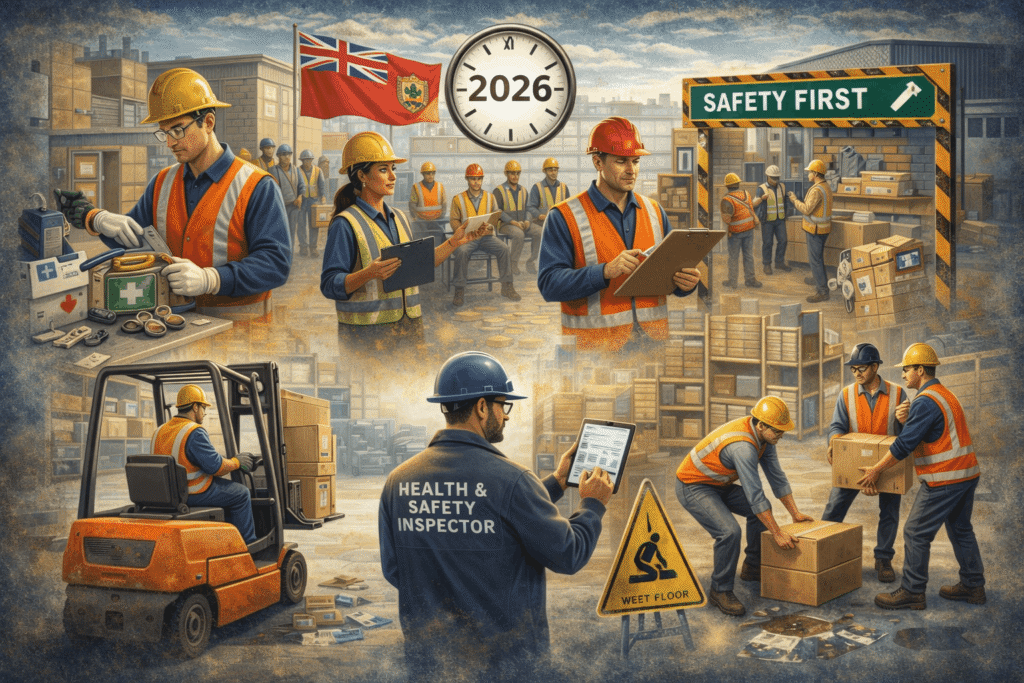

Manufacturing environments move fast. Equipment runs continuously, teams rotate through shifts, and deadlines rarely slow down. In this setting, safety cannot be treated as an afterthought. Employers across the province must remain aligned with the Workplace Health and Safety Act and related regulations governing workplace health and safety in Ontario.
Beyond avoiding fines, strong safety practices reduce downtime, improve morale, and protect long-term operations. As 2026 approaches, employers should revisit their systems and ensure their processes meet current expectations.
For more resources and workforce updates for manufacturing employers, read this blog by Manucan.
Summary of OHSA Responsibilities
Under Ontario’s Workplace Health and Safety Act, employers have clear legal duties. These include:
- Taking every reasonable precaution to protect workers
- Providing information, instruction, and supervision
- Ensuring equipment is maintained in a safe condition
- Posting required safety materials in the workplace
According to Citation Canada, employer responsibility includes maintaining safe working conditions and proactively identifying and addressing hazards (Source: Citation Canada – Employer Responsibility & Workplace Health and Safety Requirements).
Compliance is not optional. It requires documented processes, training records, and clear communication with employees.
Top 6 Safety Guidelines to Follow
Maintain Accurate Safety Records
Proper documentation is critical. OSG highlights the importance of organizing training logs, incident reports, and inspection records to demonstrate compliance (Source: OSG – Managing Health & Safety Records in Ontario). Employers should ensure that records are up to date and easily accessible.
Conduct Regular Hazard Assessments
Facilities change. Equipment is replaced, workflows shift, and staff turnover occurs. Routine hazard assessments help identify risks before they lead to injury.
Provide Ongoing Safety Training
Initial orientation is not enough. Workers should receive refresher training on equipment use, emergency procedures, and safe work practices.
Enforce Proper Use of Personal Protective Equipment
Personal protective equipment must be provided where required and its use consistently enforced. Clear signage and supervision help maintain compliance.
Establish Clear Reporting Systems
Employees should feel comfortable reporting hazards without fear of retaliation. An effective reporting structure strengthens workplace health and safety in Ontario facilities.
Review Emergency Preparedness Plans
Fire response, evacuation routes, and first-aid readiness should be reviewed regularly. Emergency drills reinforce preparedness.
Mistakes Employers Must Avoid
Some of the most common compliance gaps include:
- Incomplete documentation
- Outdated training certifications
- Failing to update policies after operational changes
- Ignoring minor incidents that signal larger risks
Citation Canada notes that employer accountability extends to proactive prevention, not just to reacting after an incident. Employers who wait for inspections to correct deficiencies often face higher costs.
Role of Workplace Safety and Prevention Services and Safety Consultants
Workplace Safety and Prevention Services offers industry-specific guidance and training resources across Ontario. These services support employers in interpreting regulations and implementing safer systems.
External safety consultants can also help audit internal processes and identify gaps. When regulations evolve, consulting experts ensure that companies remain compliant with the Workplace Health and Safety Act and broader workplace health and safety requirements in Ontario.
Build a Culture of Prevention
Health and safety compliance is not a one-time checklist. It requires continuous monitoring, leadership commitment, and employee engagement.
Ontario employers who prioritize documentation, regular training, and hazard identification are better positioned to meet regulatory expectations in 2026 and beyond. Following these six guidelines strengthens not only compliance but operational stability.
By embedding prevention into daily operations, manufacturers can protect their teams and maintain sustainable production.