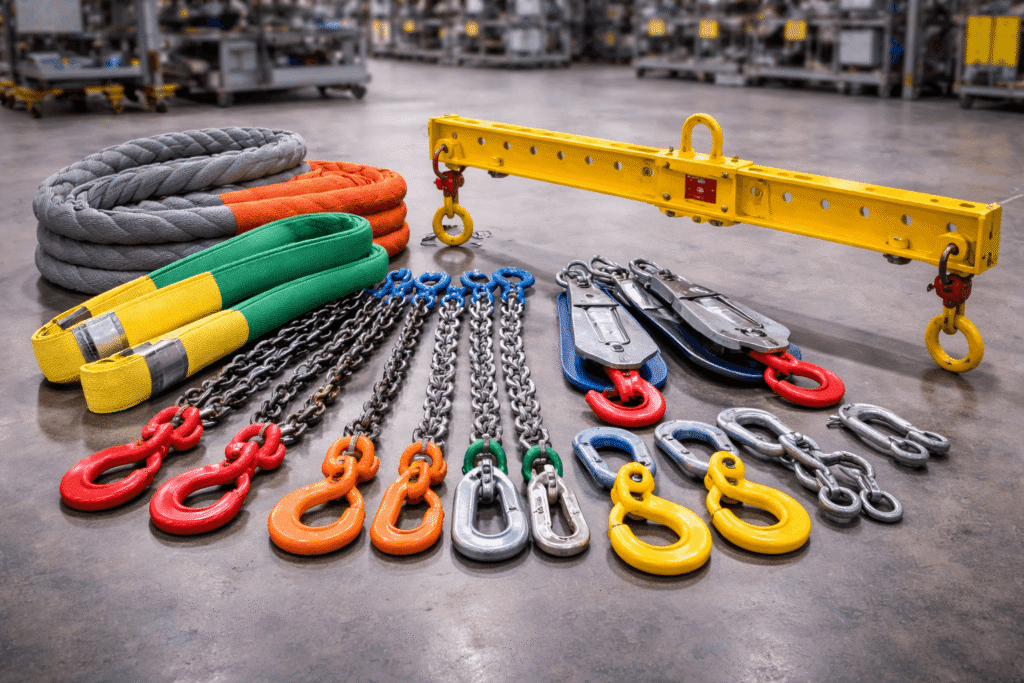

Safe lifting operations don’t happen by chance. They are the result of careful planning, trained crews, and—most importantly—the right equipment on hand. In industrial environments where loads are heavy, irregular, or suspended overhead, missing or mismatched rigging components can quickly turn a routine lift into a safety incident. A well-equipped crew is a safe crew, and building the right rigging kit is a foundational step in any lifting program.
This guide outlines seven essential pieces of lifting and rigging equipment that support safe, controlled, and compliant lifting across industrial environments. When sourced from reliable suppliers and used correctly, these components form a complete system rather than isolated tools.
1. Slings
Slings form the direct connection between the load and the lifting device. Depending on the application, crews may use synthetic web slings, round slings, wire rope slings, or chain slings. Each type serves a different purpose based on load weight, surface sensitivity, and environmental exposure.
Slings must be selected based on Working Load Limit (WLL), sling angle, and load shape. Regular inspection is critical, as slings are often the first component to show wear.
2. Shackles
Shackles connect slings to hooks, lifting lugs, or other rigging points. They are a critical link in load transfer and must be correctly sized and rated for the lift.
Industrial operations typically rely on screw-pin or bolt-type shackles, especially in overhead lifts. Proper alignment and avoidance of side loading ensure that industrial rigging systems perform as designed.
3. Turnbuckles
Turnbuckles provide controlled tensioning and alignment in rigging setups. They are commonly used to stabilize loads, adjust guy lines, or maintain structural balance during lifting or positioning.
Having multiple turnbuckle configurations—jaw, eye, or stub end—allows crews to adapt to varying connection requirements without compromising safety.
4. Hoists
Hoists supply the lifting force required to raise and lower loads. Manual chain hoists, lever hoists, and electric hoists each serve different operational needs.
Choosing the correct hoist depends on load weight, lifting frequency, available power, and required control. Hoists must be matched with compatible supporting hardware to ensure smooth and predictable operation.
5. Lifting Lugs
Lifting lugs provide dedicated attachment points on fabricated equipment, skids, or structures. Weld-on lifting lugs are commonly used in industrial environments where permanent or repeated lifting is required.
Proper lug placement, welding quality, and load orientation are essential to ensure that forces transfer safely into the structure being lifted.
6. Beam Clamps
Beam clamps create temporary or semi-permanent anchoring points on overhead beams without drilling or welding. They are frequently used to suspend hoists or rigging assemblies in facilities with existing structural steel.
Correct sizing, installation, and inspection are essential, as beam clamps directly support the suspended load and hoist system.
7. Come Alongs
Come-alongs provide manual pulling and tensioning capability where powered equipment is impractical. They are commonly used for alignment, positioning, or short-distance pulling tasks during rigging and setup.
While compact come-alongs must still be selected based on load rating and used within manufacturer guidelines to avoid overloading.
Build the Right Kit From the Right Supplier
Safe lifting operations depend on having the right components working together as a system. Slings, shackles, turnbuckles, hoists, lifting lugs, beam clamps, and come-alongs each serve a specific role within a complete rigging setup. Sourcing reliable rigging products from experienced rigging equipment suppliers ensures consistency, compliance, and long-term performance.
By investing in a well-rounded rigging inventory and maintaining proper inspection practices, industrial teams reduce risk, improve efficiency, and build confidence in every lift. Contact us today to know more!