
Electrical repairs are rarely identical from one property to another. Homes and commercial buildings rely on different systems, loads, and safety controls, which means issues must be assessed in context—not treated as quick fixes.
Whether addressing aging wiring or correcting equipment-related faults, professional home electrical repair services help prevent minor problems from escalating into safety risks. Understanding the most common repair types helps property owners better understand when licensed support is required.
Why Electrical Repair Is Never One-Size-Fits-All
Electrical systems evolve as properties age and usage changes. Renovations, added appliances, business equipment, and environmental exposure all affect how systems perform. Repairs that work in one setting may be unsafe or insufficient in another. That’s why licensed electricians begin with assessment—checking load, wiring condition, and code compliance—before completing any repair.
1. Circuit Breaker Repair
Circuit breakers protect wiring and equipment from overloads and short circuits. Over time, breakers can weaken, trip unnecessarily, or fail to trip when required. Common issues include:
- Frequent tripping under normal load
- Breakers that won’t reset
- Heat damage inside the panel
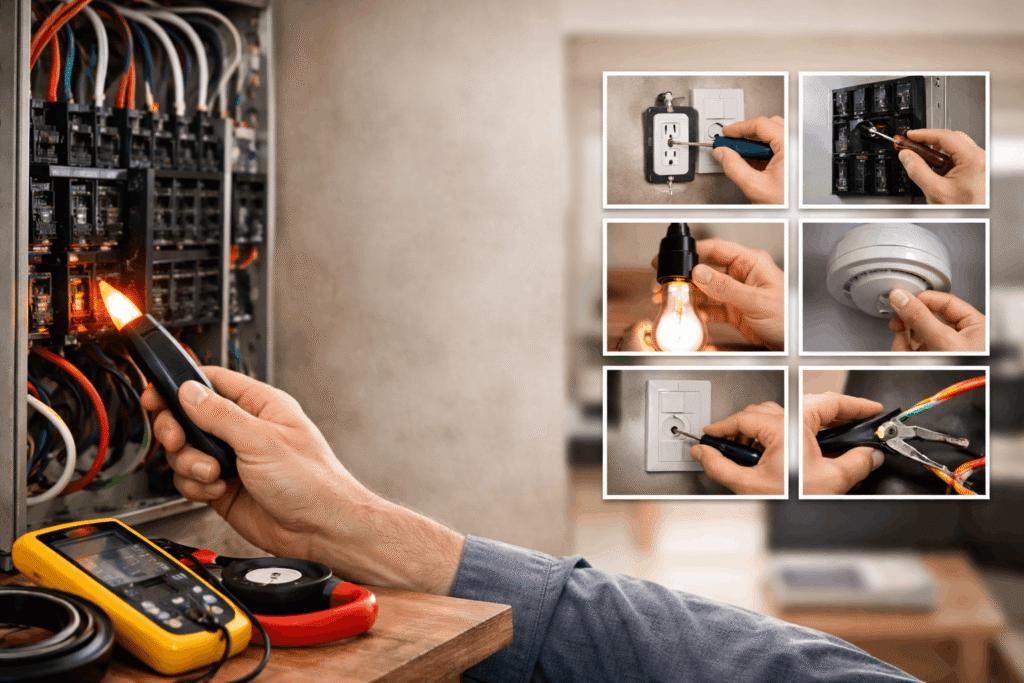
Breaker repairs may involve replacement, load redistribution, or identifying upstream wiring issues. This repair is a frequent part of both residential and commercial electrical repair work.
2. Outlet and Switch Replacement
Outlets and switches wear out with use. Loose connections, cracked housings, or discoloration can indicate internal damage. Common reasons for replacement include:
- Poor contact causing intermittent power
- Burn marks or heat buildup
- Incompatibility with modern plugs or devices
Replacing these components improves safety and reliability, especially in high-traffic areas such as kitchens, offices, and workspaces.
3. Wiring Damage and Upgrades
Wiring issues often remain hidden until problems surface. Damage may result from age, moisture, pests, or improper past work. Signs that wiring repair or upgrades are needed include:
- Flickering lights
- Warm outlets or switches
- Burning odours
- Failed inspection items
Licensed electrical repair services address damaged wiring by correcting connections, replacing conductors, or upgrading circuits to meet current code.
4. Fuse Box to Panel Conversion
Older properties may still rely on fuse boxes rather than breaker panels. While fuse systems may function, they often lack capacity and modern safety features. Converting to a breaker panel allows for:
- Improved overload protection
- Easier circuit management
- Support for modern electrical loads
This repair also simplifies future upgrades and inspections.
5. Emergency Lighting Repairs
Emergency lighting is critical in commercial and multi-unit residential properties. Repairs may involve:
- Replacing failed battery backups
- Correcting wiring to emergency circuits
- Ensuring proper illumination levels
Faulty emergency lighting can lead to inspection failures and safety concerns, making timely repair essential for compliance.
6. Commercial Machinery and Lighting Fixes
Commercial properties rely on specialized equipment and lighting systems. Repairs often involve:
- Dedicated circuit troubleshooting
- Motor and control wiring checks
- High-bay or task lighting corrections
Experienced technicians performing commercial electrical repair understand the importance of minimizing downtime while maintaining safety and code compliance.
Schedule Repairs Before They Escalate
Electrical issues rarely resolve on their own. Addressing repairs early protects people, property, and equipment while reducing long-term disruption. From minor outlet replacements to complex system corrections, licensed professionals ensure work is completed safely and appropriately documented. For dependable electrical repair services, contact Canadian Wire Wizards to schedule a licensed assessment before small issues become larger problems.