
Managing wastewater is a critical part of industrial operations. Whether storing stormwater, discharging process wastewater, or receiving raw sewage, facilities must comply with environmental regulations while protecting their infrastructure and surrounding ecosystems. Engineered wastewater storage tanks provide safe, scalable, and reliable containment for a range of industrial and municipal applications.
Belding Tank Technologies provides wastewater and sewage storage solutions designed for durability, corrosion resistance, and long-term performance in high-demand environments.
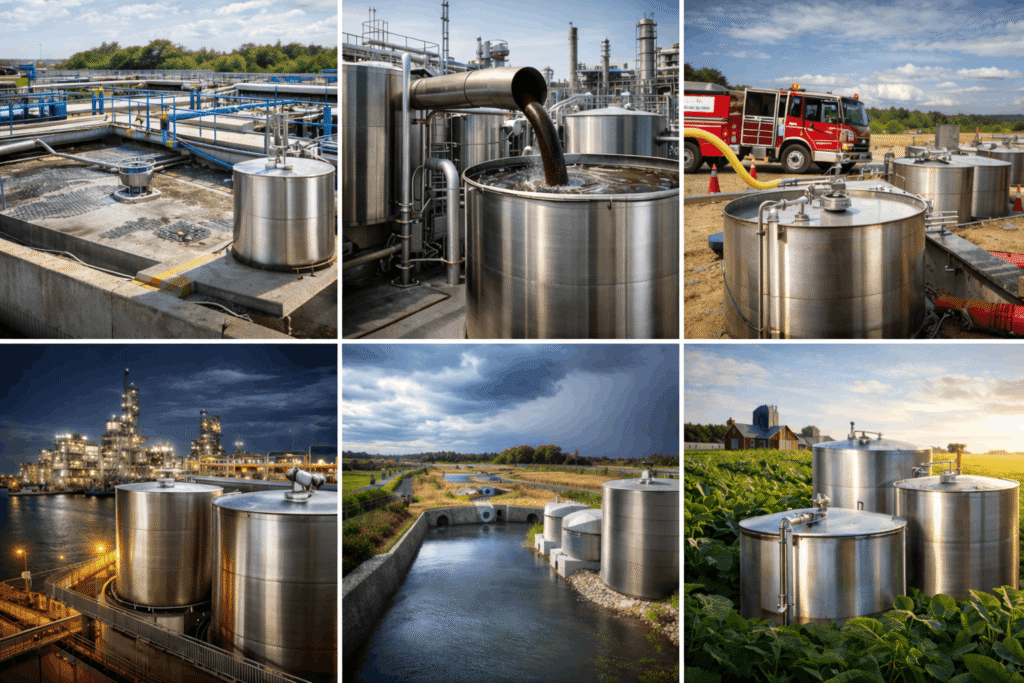
Here are six real-world applications where wastewater holding tanks are essential.
1. Municipal Stormwater Retention
Urban infrastructure must manage increasing volumes of stormwater runoff driven by heavy rainfall, aging drainage systems, and expanding paved surfaces. Municipalities use wastewater storage tanks to collect and temporarily hold stormwater during peak events, preventing flooding and sewer overflow.
Tanks are often integrated into underground systems and equipped with sediment traps and overflow outlets. These installations reduce environmental discharge and help meet public works and environmental protection standards.
2. Chemical Plant Wastewater Containment
Chemical manufacturing generates a wide range of wastewater, often containing corrosive byproducts, solvents, and heavy metals. Industrial wastewater storage tanks in these settings must be constructed from materials that resist chemical degradation.
Fiberglass reinforced plastic (FRP) tanks are commonly used due to their high corrosion resistance and ability to be customized with chemical-specific resins. These tanks also support secondary containment, leak-monitoring systems, and venting to manage vapour buildup safely.
3. Remote-Site Sewage Holding
Construction camps, remote mining facilities, and off-grid housing developments often operate without municipal sewer connections. In these cases, sewage storage tanks are used to store human waste and greywater until it can be pumped out and treated off-site.
FRP tanks are ideal for these applications because they are lightweight for transport, non-porous to prevent leakage, and resistant to freezing temperatures when insulated. Their sealed design also helps contain odours, which is especially important in confined or public-facing locations.
4. Agricultural Runoff Collection
Farms and agricultural processing operations deal with fertilizer runoff, animal waste, and washwater that can carry pathogens and pollutants. Wastewater holding tanks help collect this runoff before it enters natural water systems.
Tanks are often installed with inlet screens, sediment traps, and drainage valves. In some cases, stored runoff is redirected to irrigation or nutrient reuse systems after testing and treatment. Tanks must be built to withstand acidic, nutrient-rich liquids while providing easy access for periodic cleaning.
5. Food Processing Plant Discharge
Food and beverage production generates wastewater containing organic solids, fats, oils, sugars, and cleaning chemicals. Without proper containment, these discharges can overwhelm local treatment plants or lead to environmental violations.
Industrial wastewater storage tanks in these settings must be easy to clean, resistant to microbial growth, and compatible with high-temperature washdowns. FRP tanks with sloped bottoms and full-drain features are commonly used to handle cleaning cycles, production discharge, and process water reuse.
6. Temporary Construction Wastewater Storage
Active construction sites frequently generate wastewater from equipment washing, drilling operations, and sanitary needs. Temporary wastewater storage tanks are used to store greywater and contaminated runoff until treatment or disposal is arranged.
These tanks must be durable, portable, and capable of withstanding physical impacts and UV exposure. Above-ground FRP tanks are often preferred due to their ease of transport and setup. In some jurisdictions, construction wastewater storage is mandated by permit, making compliant tanks essential.
Conclusion
Whether managing stormwater, chemical runoff, or sewage, engineered wastewater storage tanks help industrial and municipal operations maintain environmental compliance and operational efficiency. By selecting the right tank material, size, and features for each application, facilities can protect both their infrastructure and the communities around them.
To design a wastewater containment system for your industrial or municipal application, contact Belding Tank Technologies.