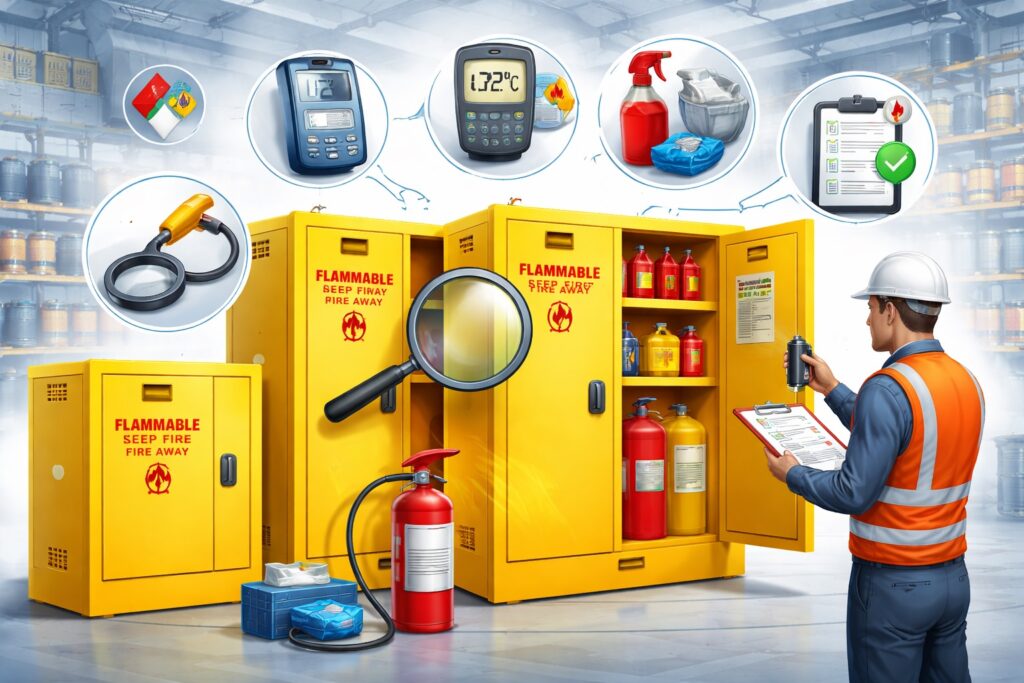

Flammable liquids are commonly used across Ontario’s industrial establishments, from manufacturing operations to maintenance activities. While these materials are often stored in a flammable storage cabinet, the cabinet itself is not simply a piece of furniture. Its placement, structural design, and integration with other safety systems determine whether it effectively reduces fire risk.
When evaluating flammable liquid storage cabinets, engineering oversight is often necessary to confirm compliance with Ontario Regulation 851 and relevant CSA standards. Cabinets must be assessed not only for their physical construction but also for their interactions with surrounding equipment, ventilation systems, and ignition sources.
Understanding the engineering checks associated with cabinet safety helps ensure that flammable cabinet safety is properly addressed within broader workplace safety programs.
More Than a Box: Why Cabinet Safety Is Engineering-Relevant
Many facilities treat storage cabinets as standalone safety products. However, the presence of flammable liquids introduces hazards that extend beyond the cabinet itself. Improper placement, inadequate containment, or incompatible surroundings can compromise safety even when the cabinet meets manufacturing specifications.
Engineering evaluations ensure that a flammable storage cabinet functions as part of a larger fire risk management system. This includes assessing how cabinets interact with equipment layouts, work processes, and emergency response planning.
CSA Standards and O.Reg 851 Requirements
Ontario Regulation 851 establishes requirements for handling hazardous materials within industrial establishments. While the regulation focuses on hazard prevention, CSA standards provide additional guidance on the construction and use of flammable liquid storage cabinets.
These standards address cabinet durability, fire resistance, and containment design. Compliance with these guidelines ensures that cabinets perform as intended during fire exposure or spill events.
Facilities that rely solely on manufacturer specifications without reviewing regulatory context may overlook compliance obligations tied to cabinet use.
Structural Design and Spill Containment
Engineering evaluation begins with the cabinet structure. A compliant flammable storage cabinet must be designed to contain liquid spills and resist heat exposure long enough to allow emergency response.
Structural assessments typically examine cabinet wall construction, door sealing mechanisms, and the presence of a containment sump designed to capture accidental spills. Spill containment features help prevent liquids from spreading into work areas where they could ignite.
Proper containment design also simplifies cleanup procedures and reduces environmental exposure following accidental releases.
Distance from Ignition Sources
Placement of flammable liquid storage cabinets is another critical factor. Cabinets must be positioned at safe distances from sources such as electrical equipment, heating systems, and machinery capable of generating sparks.
Engineering assessments evaluate these distances in relation to facility layout and operational processes. If cabinets are installed too close to potential ignition sources, their ability to reduce fire risk may be compromised.
Maintaining safe separation between cabinets and heat-producing equipment is a fundamental aspect of flammable cabinet safety.
Integration with Fire Suppression and Ventilation
Cabinet safety cannot be evaluated in isolation. Engineering reviews must consider how cabinets interact with fire suppression systems and ventilation.
Ventilation may be required where vapours could accumulate during handling operations. In addition, fire suppression coverage should be evaluated to confirm that cabinets are located within the facility’s protected zones.
This integration ensures that flammable storage cabinet installations function within a coordinated fire protection strategy rather than treated as isolated safety measures.
Signage and Inspection Records
Administrative controls support engineering safeguards. Proper signage alerts workers to the presence of flammable liquids and reinforces safe handling practices.
Inspection programs should confirm that flammable liquid storage cabinets remain in good condition, with intact seals, clear labels, and unobstructed access. Inspection records also demonstrate compliance during safety audits or regulatory reviews.
Maintaining accurate documentation helps ensure the long-term safety of flammable cabinets.
Engineering Sign-Off for Safety Compliance
In facilities where flammable liquids are used in industrial processes, engineering oversight may be necessary to confirm that cabinet placement and containment strategies align with regulatory requirements.
Erequirementsign-off verifies that flammable storage cabinet installations support safe storage practices within the broader workplace safety program. This evaluation helps identify hazards tied to cabinet location, structural integrity, or surrounding equipment.
Don’t Overlook Cabinets in Safety Programs
Although often considered simple storage solutions, flammable liquid storage cabinets play a critical role in controlling fire hazards in industrial establishments. When properly evaluated, cabinets support safer storage practices and strengthen compliance with Ontario safety requirements.
By incorporating engineering reviews and inspection programs, facilities can ensure that flammable cabinet safety remains integral to workplace management.
SAFE Engineering Inc. provides engineering-based guidance on safely storing flammable liquids to help Ontario industrial establishments integrate cabinet safety into their overall compliance strategy. For more information, contact us now!