
Modern biotech laboratories are under pressure to deliver faster results, maintain strict quality standards, and scale operations without increasing operational complexity. As workflows expand and research timelines shorten, many labs are moving toward automation-first models that prioritize integration, coordination, and intelligent control.
High-performance environments now rely on structured laboratory automation solutions that go beyond individual devices. The goal is no longer partial automation but cohesive systems that support throughput, reproducibility, and long-term scalability.
Why Labs Are Shifting to Automation-First Models
Measurable operational demands drive automation-first strategies. Manual intervention introduces variability, slows execution, and limits scalability. In high-throughput labs, even minor inefficiencies multiply across hundreds or thousands of samples.
By adopting comprehensive laboratory automation solutions, labs can standardize processes, reduce human error, and ensure consistent execution across workflows. Automation-first models also enable better visibility into performance metrics, equipment utilization, and scheduling efficiency.
At Retisoft, we see automation-first thinking as a strategic shift rather than a technical upgrade. Labs are redesigning workflows to focus on coordination and scalability from the start, rather than layering automation onto manual systems.
Robotics-Based Automation Solutions
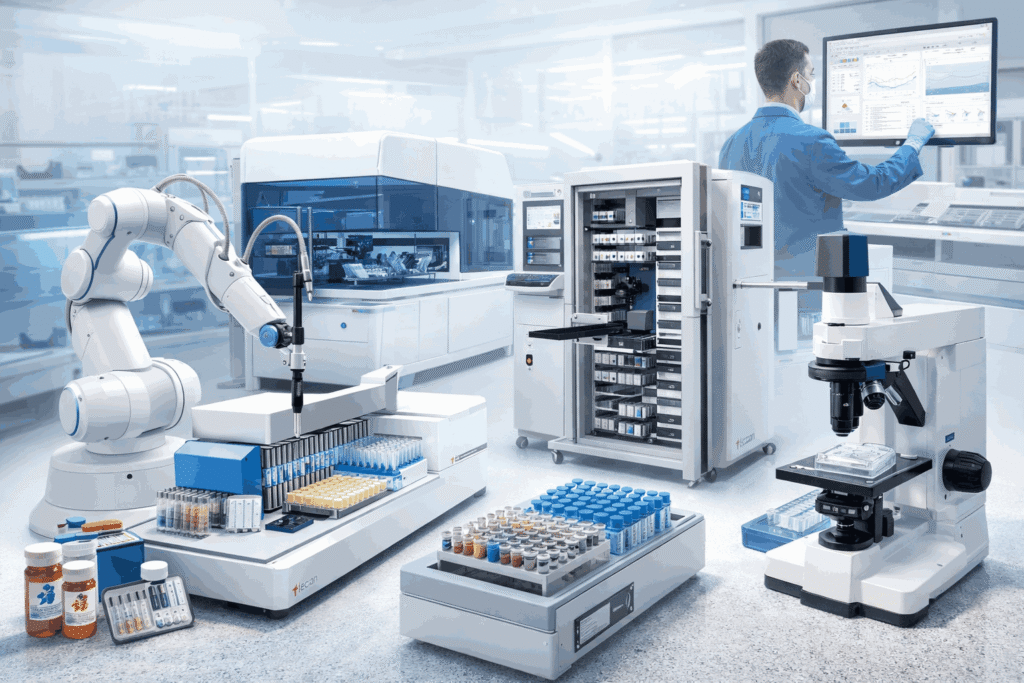
Robotics is foundational to modern laboratory robotics and automation environments. Robotic arms, plate handlers, and automated transfer systems manage repetitive, time-sensitive tasks with precision.
In high-performance labs, robotics support:
- Automated plate movement between instruments
- Device loading and unloading
- Sample transfers across multi-step workflows
- Continuous operation during extended runs
Robotics improves utilization and reduces downtime, especially in shared lab environments where multiple teams depend on the same equipment. When properly integrated, robotic systems transform workflow reliability and throughput.
Workflow Orchestration and Scheduling Solutions
Automation hardware alone does not guarantee efficiency. Scheduling and orchestration platforms are critical to coordinating instruments, robotics, and workflow dependencies.
Workflow orchestration ensures tasks run in the correct sequence and dynamically adjust to real-time conditions. If a step completes early or a device becomes available, scheduling systems automatically reallocate tasks.
At Retisoft, we design automation strategies where orchestration software connects instruments into unified processes rather than isolated operations. This coordination minimizes idle time and reduces manual oversight, enabling labs to operate proactively rather than reactively.
System Integration and Lab Automation Services
Integration is often the deciding factor between fragmented automation and cohesive performance. High-performing labs invest in structured lab automation services that connect devices, robotics, and data systems into a seamless ecosystem.
Integration services typically include:
- Device communication setup
- API and data pathway configuration
- Workflow mapping and validation
- Incremental deployment planning
At Retisoft, we work directly with biotech teams to integrate automation platforms into existing infrastructures without disrupting operations. Our approach emphasizes flexibility and long-term scalability, ensuring that automation investments continue to deliver value as labs grow.
Data Management and Monitoring Solutions
Automation generates large volumes of operational and experimental data. Without structured monitoring, this data becomes underutilized.
Modern laboratory automation solutions include centralized data capture, execution logs, and performance monitoring dashboards. These systems support traceability, compliance readiness, and workflow optimization.
Real-time monitoring provides insight into equipment utilization, bottlenecks, and system health. This visibility allows lab managers to make informed decisions about resource allocation and capacity planning.
When combined with orchestration and robotics, data management transforms automation from task execution into performance optimization.
Conclusion
High-performance labs require more than isolated automation tools. They depend on integrated strategies that combine robotics, orchestration software, system integration, and data monitoring into cohesive laboratory automation solutions.
By investing in structured laboratory robotics and automation platforms, as well as professional lab automation services, biotech facilities can improve accuracy, scalability, and operational resilience.
At Retisoft, we help biotech teams implement automation strategies that drive growth, enhance flexibility, and enable coordinated execution. To explore how integrated automation can support your lab’s performance goals, contact us now!